Zero Trust in Hosting: Key Threat Detection Tools

Zero Trust security is critical for hosting environments where traditional defenses fail against modern threats. This approach assumes no user, device, or connection is safe without verification, making it essential for cloud services, hybrid infrastructures, and multi-tenant setups. Key tools for Zero Trust threat detection include:
- Zscaler App Segmentation: Direct app connections with micro-segmentation and SSL inspection.
- SentinelOne Analytics: AI-powered endpoint protection against ransomware, fileless malware, and lateral attacks.
- Xcitium Containment: Isolates unknown processes with minimal resource impact, blocking zero-day threats.
- Serverion DDoS Protection: Multi-layer filtering for network traffic tailored to hosting services.
- Cisco ETA: Detects threats in encrypted traffic without decryption using behavioral analysis.
- Palo Alto Prisma Access: AI-driven firewall with application-layer security and unified cloud policies.
Quick Comparison
| Tool | Focus Area | Best Use Case | Complexity |
|---|---|---|---|
| Zscaler App Segmentation | App-specific micro-segmentation | Large cloud deployments | Medium |
| SentinelOne Analytics | Endpoint protection | Mixed environments | Low |
| Xcitium Containment | Process isolation | Endpoint-heavy networks | Medium |
| Serverion DDoS Protection | Network traffic filtering | High-volume hosting setups | Low |
| Cisco ETA | Encrypted traffic analysis | Network-centric environments | Medium |
| Palo Alto Prisma | Application-layer security | Hybrid cloud infrastructures | High |
Zero Trust tools work best when combined, ensuring layered defenses across endpoints, network traffic, and applications. Start by matching tools to your hosting setup and scaling them as your infrastructure evolves.
What is Zero Trust Network Access (ZTNA)? The Zero Trust Model, Framework and Technologies Explained
Zero Trust Basics for Hosting
The NIST Zero Trust Architecture (ZTA) framework is built on five key components:
Identity-Centric Security focuses on using MFA (multi-factor authentication) and dynamic access policies. These policies adjust based on factors like where the user is located and when the access request is made.
Micro-segmentation ensures that resources in multi-tenant hosting environments are divided into isolated zones. This setup prevents attackers from moving across segments, even if one is compromised, as each customer’s resources are kept separate.
Continuous Monitoring involves constant verification through automated tools. These tools use behavioral analysis, check device health, and revalidate sessions to maintain security at all times.
Data-Centric Protection emphasizes protecting data itself rather than just the network. Encryption is required for all data, whether stored or being transferred. Access controls are applied directly to the data, ensuring it stays secure no matter where it is within the hosting system.
These components support the threat detection tools we’ll discuss next, enabling real-time, automated enforcement of Zero Trust principles.
Main Zero Trust Detection Elements
Zero Trust threat detection is built on five key elements that work together to deliver automated, real-time security.
AI behavior analysis is at the heart of modern Zero Trust detection. By constantly monitoring user and system activities, it uses machine learning to establish normal behavior patterns and spot unusual activity. This approach speeds up threat detection by as much as 80% compared to older methods, analyzing patterns in real time and adjusting to new threats as they emerge.
Advanced Microsegmentation takes traditional segmentation to the next level with real-time identity mapping. It’s especially useful in multi-tenant hosting setups, where it has been shown to reduce successful breaches by 60%. This is achieved through precise workload isolation and strict access controls.
Encrypted Traffic Inspection tackles the challenges of monitoring encrypted data in modern hosting environments. By decrypting SSL/TLS traffic at set inspection points, it enables:
- Deep Packet Analysis to detect hidden malware and threats
- Data Loss Prevention to stop unauthorized data leaks
- Policy Compliance to enforce security rules while respecting privacy
Continuous Authentication ensures user identity and device security are verified throughout the session. It dynamically adjusts access based on real-time risk levels and context.
Policy Automation applies Zero Trust principles by integrating threat intelligence and device health checks to make instant, informed access decisions.
These elements are particularly critical in containerized and serverless environments, where traditional perimeter defenses fall short. Together, they lay the groundwork for implementing Zero Trust security, which we’ll explore further in the next section.
1. Zscaler App Segmentation
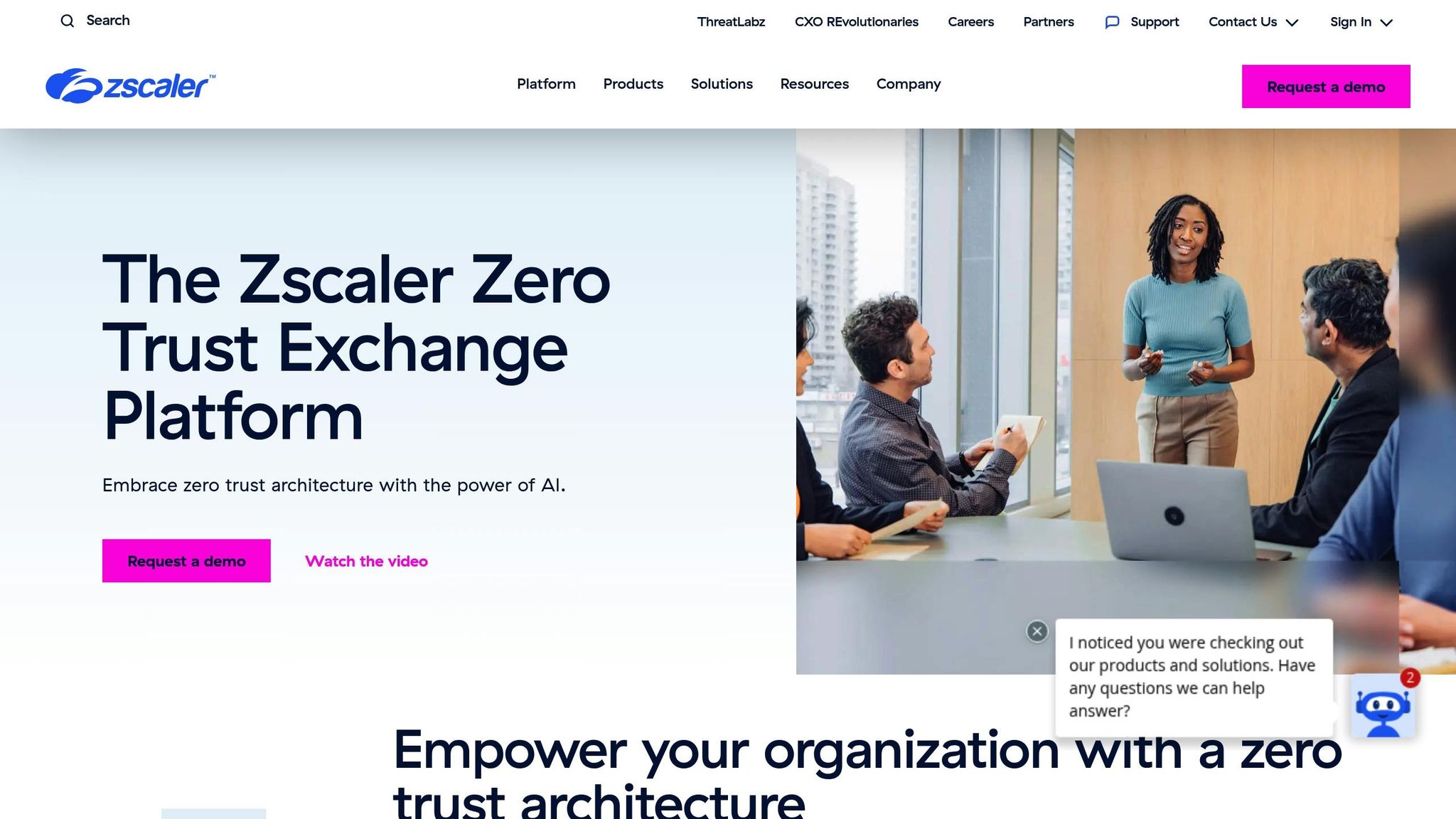
Zscaler App Segmentation takes Zero Trust principles to the next level by focusing on application-specific security through its Zero Trust Exchange platform. Instead of connecting users to networks, this cloud-based solution connects them directly to the applications they need.
Using micro-segmentation, Zscaler creates secure, isolated connections around individual apps. Their microtunneling technology ensures each user request is securely handled, which is especially important in multi-tenant hosting setups. This approach prevents unauthorized access between clients sharing the same infrastructure. With over 150 global Zero Trust Exchanges, the platform provides advanced features like full SSL inspection, AI/ML-driven threat detection, and automated policies.
Zscaler integrates seamlessly with tools like SWG, DLP, and CASB, creating a unified security system. Recognized by Gartner in the Security Service Edge category, it supports multi-cloud environments while maintaining consistent policies. Its proxy-based architecture inspects all traffic without requiring changes to existing infrastructure, making it ideal for securing diverse, distributed hosting environments.
2. SentinelOne Analytics Platform
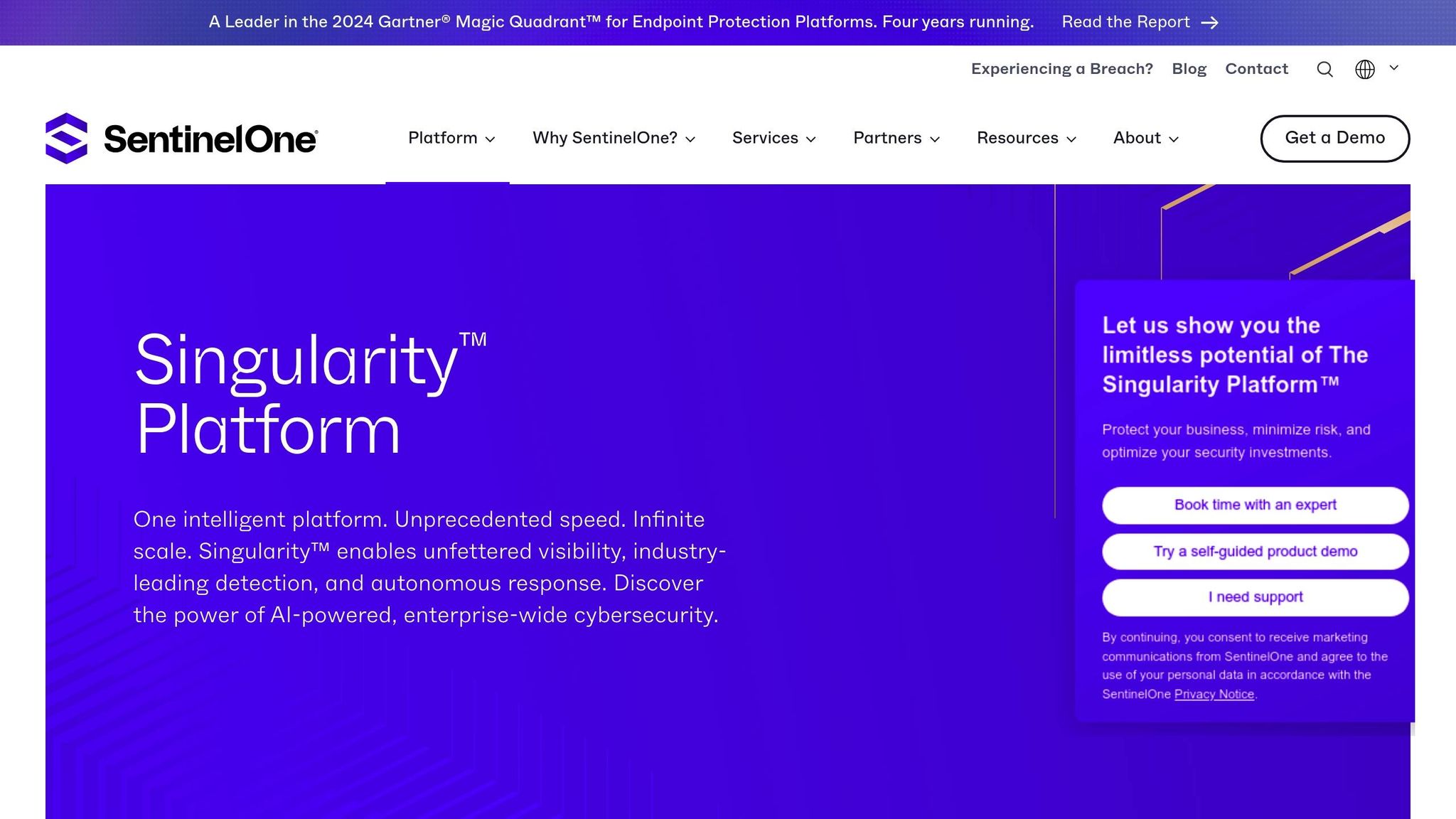
SentinelOne’s Analytics Platform makes a mark in Zero Trust hosting environments with its Singularity XDR platform, leveraging AI to spot anomalies in real time. This approach works alongside Zscaler’s application-layer protections, specifically addressing endpoint risks.
Here’s how the platform aligns with key Zero Trust detection areas:
| Detection Area | Capability |
|---|---|
| Ransomware | Detects and halts attacks before data encryption occurs |
| Fileless Malware | Identifies memory-based threats that leave no disk traces |
| Lateral Movement | Tracks and blocks attacks spreading across systems |
| Supply Chain Attacks | Spots compromised software components in the supply chain |
These features reinforce Zero Trust’s principle of continuous authentication by validating device health during threat evaluations.
Built on a cloud-native architecture, the platform uses edge computing for localized threat analysis. It scales effortlessly, even in high-density environments, while keeping its agent footprint low. With a 4.9/5 rating on Gartner Peer Insights from over 1,000 reviews[1], SentinelOne also simplifies securing new cloud workloads in hybrid setups through a single dashboard.
In 2022, a Fortune 500 company using the platform reported a 58% faster threat containment across global operations[1]. SentinelOne’s endpoint-focused approach mirrors Xcitium’s proactive containment strategy, which we’ll explore next.
3. Xcitium Containment System
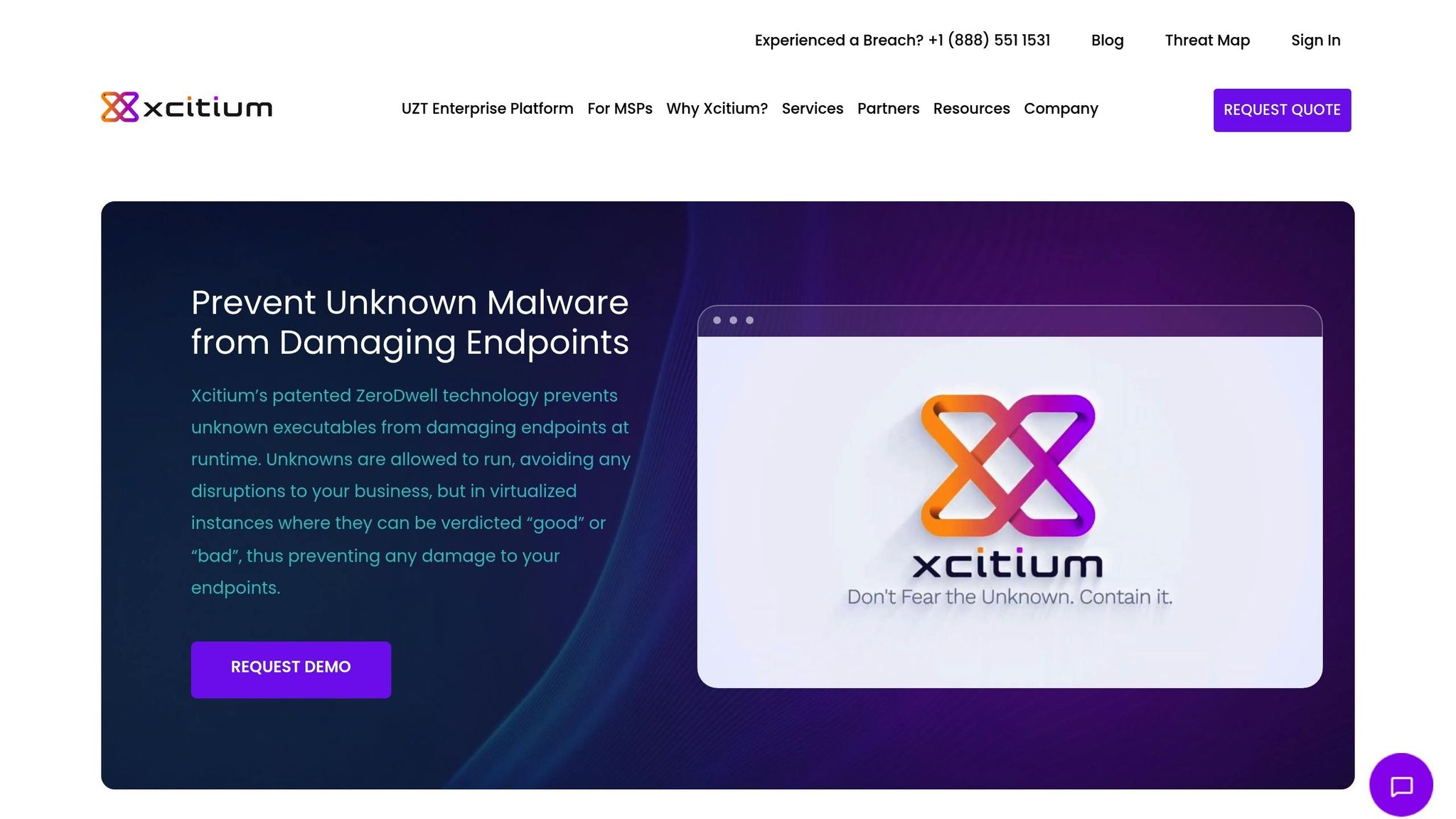
Xcitium’s Containment System builds on security strategies like SentinelOne’s endpoint protection and Zero Trust’s continuous monitoring. It uses a ‘default deny’ posture, isolating unknown applications in secure virtual environments. Impressively, its automated containment uses less than 1% of system resources, ensuring hosting performance remains unaffected.
| Feature | Implementation | Security Benefit |
|---|---|---|
| Auto-Containment | Isolates unknown processes | Blocks zero-day attacks |
| Behavioral Analysis | Machine learning monitoring | Detects new threat patterns |
| Resource Management | Optimized resource allocation | Preserves hosting efficiency |
| Global Threat Intel | Cloud-based verdict system | Delivers real-time updates |
In one example, a major hosting provider faced a complex fileless malware attack. Xcitium’s system automatically contained the threat, allowing the security team to neutralize it within hours – without disrupting services. This highlights Zero Trust’s core idea: ‘never trust, always verify,’ applied effectively in multi-tenant environments.
The system also strengthens microsegmentation by isolating processes and integrates seamlessly with tools like cPanel, Plesk, APIs, and virtualization platforms. It ensures 99.99% uptime and provides rapid threat analysis within minutes.
This container-based solution works hand-in-hand with Serverion’s network-level DDoS protections, which we’ll discuss next.
sbb-itb-59e1987
4. Serverion DDoS Protection
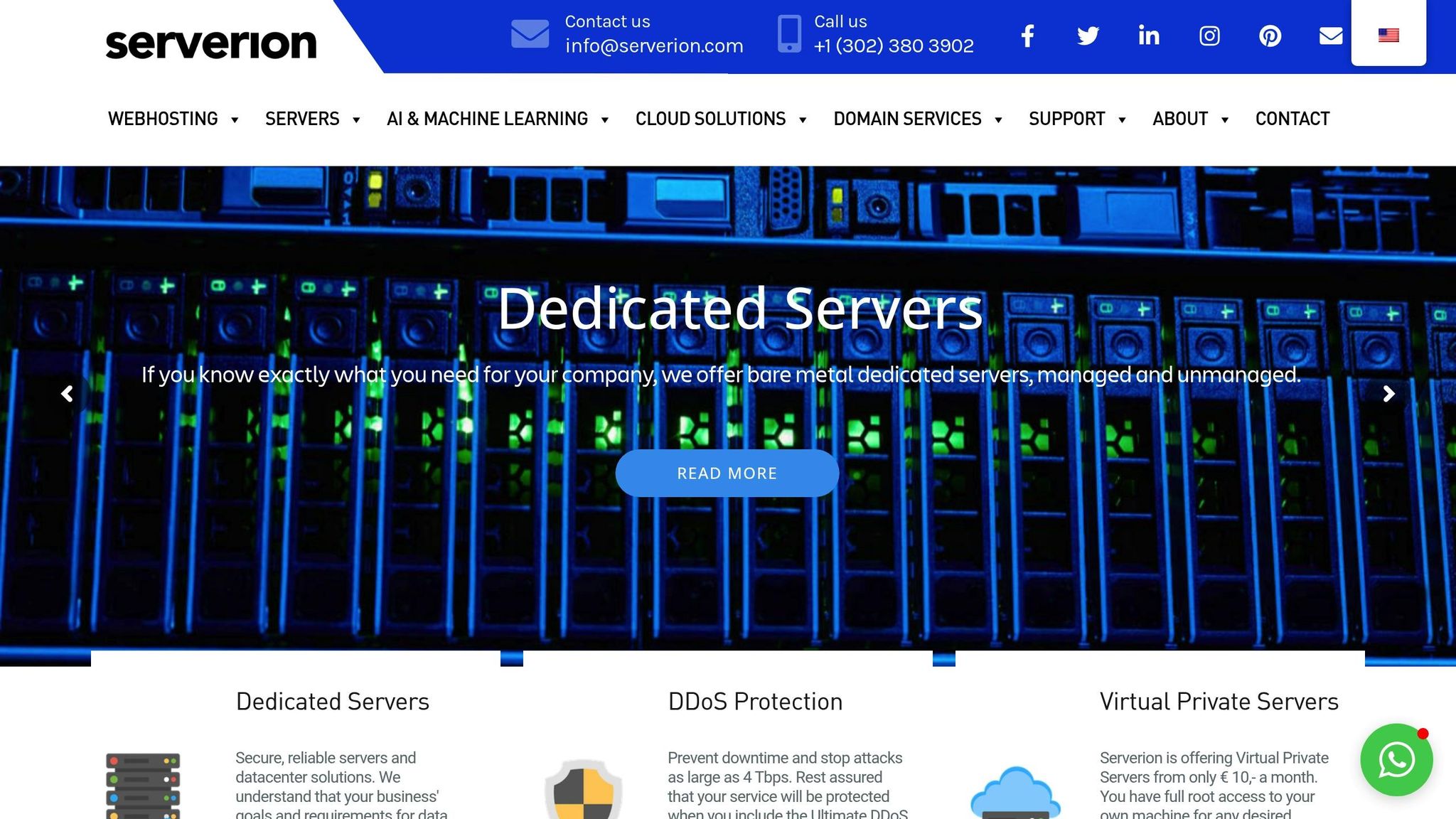
Serverion’s DDoS Protection builds on Xcitium’s process isolation by applying Zero Trust principles to analyze network traffic. It uses a multi-layered filtering system tailored for various hosting services, including web hosting and blockchain nodes. True to Zero Trust’s "never trust" philosophy, all traffic is treated as potentially harmful.
| Protection Layer | Security Features |
|---|---|
| Application (L7) | Traffic pattern analysis |
| Network-layer | Attack traffic filtering |
| DNS Infrastructure | Query monitoring |
| Voice Services | Anomaly detection |
The system continuously updates its filtering rules based on new attack patterns. Every connection attempt is closely examined, no matter where it originates, ensuring strong protection without disrupting service availability.
For critical services like RDP and blockchain nodes, the system adjusts to their specific traffic behaviors. This ensures that protocol-specific threats are blocked while legitimate access remains intact. This detailed traffic analysis pairs well with Cisco’s encrypted flow analysis, which we’ll explore next.
5. Cisco ETA System
Cisco’s Encrypted Traffic Analytics (ETA) system takes Zero Trust security to the next level by identifying threats in encrypted traffic without needing to decrypt it. This is especially important for environments that deal with high volumes of encrypted data. It aligns perfectly with Zero Trust’s core idea: verify everything, even encrypted traffic.
ETA works by analyzing network metadata and behavioral patterns. Instead of decrypting sensitive traffic, it examines details like packet lengths, timing, and communication patterns to spot potential risks. This method keeps network performance intact while maintaining security.
| Component | Function | Security Benefit |
|---|---|---|
| Stealthwatch | Collects and analyzes flow data | Provides real-time threat monitoring |
| ML Models | Recognizes patterns | Detects evolving threats |
| Global Threat Intelligence | Aggregates threat data | Delivers up-to-date insights |
| SecureX Integration | Offers unified management | Simplifies centralized control |
In practice, ETA has proven its worth. For instance, a financial services provider used it to block 37 advanced malware attacks, slashing detection time from 3 days to just 4 hours.
The system is particularly effective at identifying threats like malware communication, command-and-control traffic, and data exfiltration attempts. It continuously adapts to new attack methods and patterns.
When combined with tools like Serverion, which blocks obvious attacks, ETA uncovers hidden dangers. Together, they create a layered defense strategy that aligns with Zero Trust principles, ensuring protection against both visible and stealthy threats within encrypted traffic.
"ETA transformed our ability to detect threats in encrypted traffic without compromising privacy"
6. Palo Alto Prisma Access
Palo Alto Prisma Access goes beyond analyzing encrypted traffic patterns (like Cisco ETA) by focusing on application behaviors through its cloud-based Zero Trust platform. This AI-powered firewall works with threat prevention tools to secure hosting environments effectively.
The platform uses microsegmentation to strengthen application-level security. For example, one hosting provider cut down false positives by 40% while still achieving full threat detection during stress tests in 2023.
| Security Feature | Function | Zero Trust Benefit |
|---|---|---|
| Cloud SWG | Web threat protection | Blocks malicious sites in real-time |
| CASB | SaaS visibility | Prevents unauthorized app usage |
| DLP | Data protection | Stops data exfiltration |
Prisma Access taps into Palo Alto Networks’ global threat intelligence systems, like AutoFocus and WildFire, to identify new threats as they emerge.
For environments combining dedicated servers and cloud instances, Prisma Access offers a single, unified view. It ensures consistent policies across both bare-metal and virtual hosts, automates policy setups, and prevents internal threats from spreading.
This focus on application-layer security complements Serverion’s network defenses and Cisco’s traffic analysis, forming a complete Zero Trust detection framework.
Tool Comparison
Choosing the right tools for Zero Trust threat detection largely depends on your specific needs and operational setup. Here’s a breakdown of key tools and their strengths:
| Tool | Scalability | Zero Trust Implementation Complexity | Best Use Case |
|---|---|---|---|
| Zscaler App Segmentation | High (cloud-native) | Medium | Ideal for large cloud deployments |
| SentinelOne Analytics | High | Low | Works well in mixed environments |
| Xcitium Containment | Moderate | Medium | Suited for endpoint-heavy setups |
| Serverion DDoS Protection | High | Low | Designed for high-volume Zero Trust environments |
| Cisco ETA | High | Medium | Focused on network infrastructure |
| Palo Alto Prisma | High | High | Best for hybrid environments |
Each tool has its own strengths tailored to specific Zero Trust scenarios. Cloud-native tools shine in large-scale setups, while hybrid solutions cater to more varied infrastructure needs.
Conclusion
The six tools we’ve covered – from Zscaler’s app segmentation to Palo Alto’s cloud firewall – show how Zero Trust detection works across different layers. Choosing the right tools means aligning their features with the needs of your hosting environment.
To deploy Zero Trust effectively, it’s crucial to match the layered protections we’ve discussed with your infrastructure. Focus on selecting tools that fit your system’s requirements and integrate well with your existing setup.
Strong implementations combine network-level defenses with infrastructure optimization. Use a mix of endpoint containment, traffic analysis, and application security tools, while routinely reviewing and updating access controls.
FAQs
What is the most effective zero trust framework?
The best zero trust framework varies based on your hosting environment and infrastructure needs. These frameworks work alongside detection tools by providing the foundation for enforcing security policies.
Popular Enterprise Solutions:
| Framework | Key Features | Ideal For |
|---|---|---|
| Palo Alto Prisma | Cloud-focused security, AI-driven insights | Hybrid cloud setups |
| Cisco ETA | Analyzes encrypted traffic, detects threats | Network-centric environments |
| SentinelOne | AI-based endpoint protection, XDR support | Diverse infrastructure setups |
| Xcitium | Process isolation, automated threat containment | Endpoint-heavy networks |
Factors to consider when selecting a framework:
- How well it integrates with your current systems
- Ability to scale as your needs grow
- Impact on system performance
- Compliance with industry standards
To strengthen your zero trust approach, pair tools like microsegmentation for network containment with analytics platforms to monitor and validate every access attempt, no matter its source.