Green Data Centers for Blockchain Hosting

Blockchain hosting is energy-intensive, but green data centers offer a solution. By using renewable energy, advanced cooling systems, and efficient hardware, green data centers reduce carbon emissions and energy costs. This shift is essential as data centers consume 1% of global electricity and blockchain operations like Bitcoin mining contribute significantly to CO₂ emissions.
Key Takeaways:
- Energy Savings: Green data centers cut energy costs by up to 40%.
- Environmental Impact: Reduce carbon emissions by 50% or more.
- Renewable Energy: Solar, wind, and hydroelectric power replace fossil fuels.
- Advanced Cooling: Liquid cooling and AI-driven systems improve efficiency.
- Challenges: High upfront costs, reliance on renewable energy, and integration with existing systems.
- Blockchain Example: Ethereum’s move to Proof of Stake reduced its carbon footprint by 99.95%.
| Feature | Green Data Center | Conventional Data Center |
|---|---|---|
| Energy Source | Renewable (solar, wind, hydro) | Fossil Fuels |
| Cooling System | Advanced (liquid, AI-driven) | Standard Air Conditioning |
| Carbon Emissions | Lower | Higher |
| Cost Efficiency | Long-term savings | Higher operational costs |
Green data centers are the future of blockchain hosting, balancing performance with sustainability. Transitioning to these eco-friendly solutions is a smart move for organizations aiming to reduce costs and environmental impact.
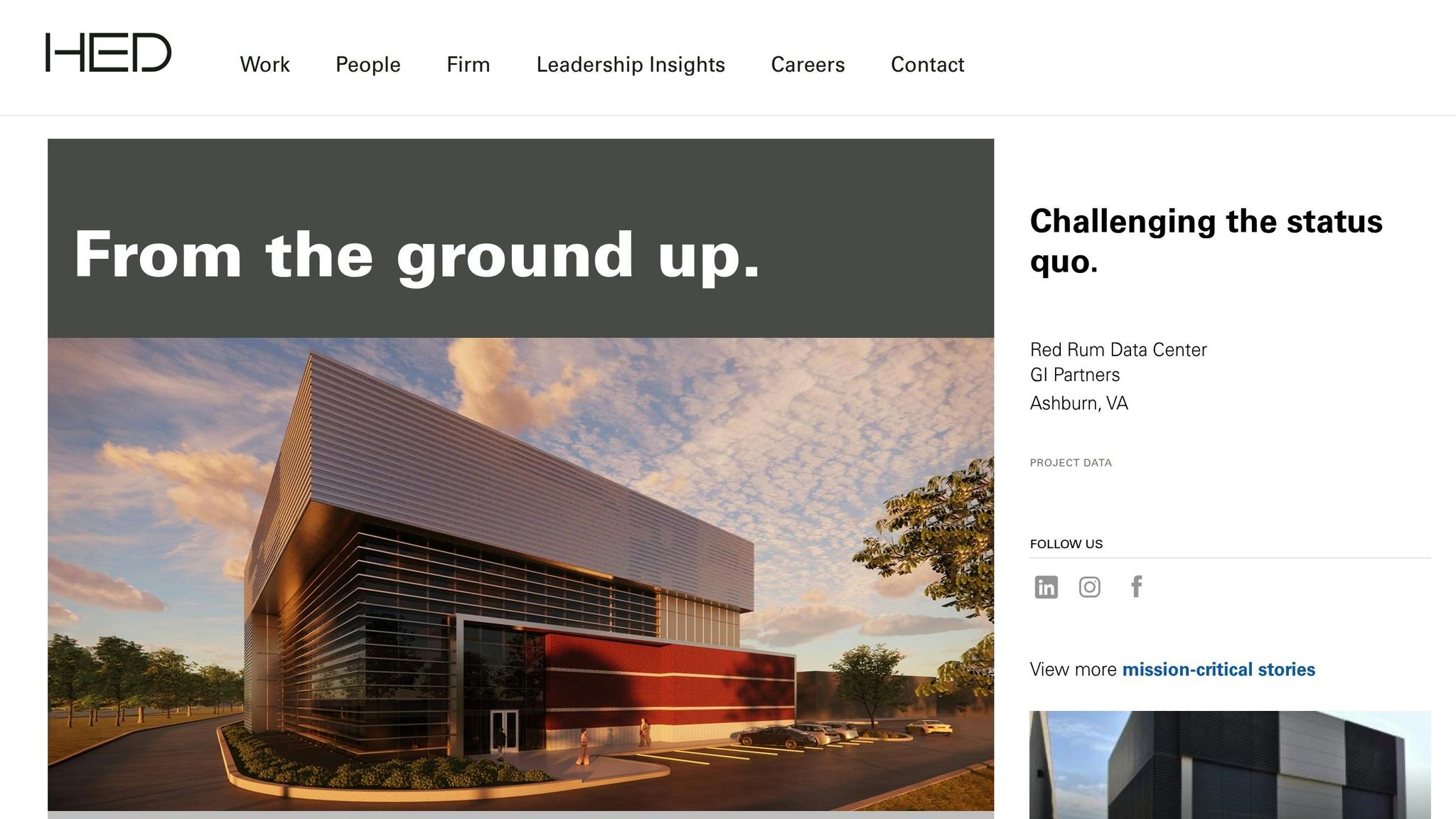
3154: The Future of Green Data Centers: Insights from HED
Key Features of Green Data Centers for Blockchain Hosting
Green data centers are designed with technologies and principles that make them a perfect fit for blockchain hosting while prioritizing sustainability. At Serverion, we integrate these advanced green solutions to ensure efficient and eco-friendly blockchain operations.
Renewable Energy Sources
Green data centers rely heavily on renewable energy, offering the reliability and efficiency needed for blockchain hosting. By moving away from traditional fossil fuel power grids, these facilities embrace clean, renewable energy sources such as solar, wind, and hydroelectric power.
Leading data centers worldwide have shown that incorporating renewable energy significantly reduces emissions and stabilizes energy costs. For instance:
- Solar power uses on-site solar arrays to generate clean electricity.
- Wind energy harnesses nearby wind farms for consistent power.
- Hydroelectric power taps into local water sources to meet high energy demands.
These transitions not only benefit the environment but also provide long-term financial stability, as renewables are less affected by price fluctuations compared to fossil fuels. Additionally, renewable energy projects contribute to local economies by creating jobs in construction, maintenance, and technology sectors.
Brazil illustrates the potential of renewable energy on a national scale, with renewables dominating its energy mix. This has positioned the country as a global leader in sustainable blockchain hosting.
"From an energy standpoint, Brazil is very attractive to the world for navigating the artificial intelligence revolution sustainably."
- Fernando Jaeger, Director of Sales, Finance, and Business Development, ODATA
| Renewable Energy Source | Environmental Benefits |
|---|---|
| Solar Power | Reduces dependency on traditional energy and cuts carbon emissions |
| Wind Energy | Provides a clean alternative, lowering the ecological footprint |
| Hydroelectric Power | Meets high energy demands while significantly reducing emissions |
By combining cost efficiency, reliability, and environmental responsibility, renewable energy forms the backbone of green data centers.
Energy Efficiency and Advanced Cooling Systems
Energy efficiency is another critical factor for green data centers, especially given the high energy demands of blockchain hosting. Cooling systems, which can account for up to 40% of a data center’s energy use, are a major focus for optimization.
Traditional air-based cooling systems often fall short when managing the heat generated by modern servers. Green data centers tackle this with liquid cooling systems, which are far more effective at dissipating heat. For example, CoolestDC in Singapore uses oblique-fin liquid cooling technology, achieving a Power Usage Effectiveness (PUE) of less than 1.06. This results in 25–50% energy savings, reduced CO₂ emissions, and improved server performance by 15–80%.
Research is pushing the boundaries of cooling efficiency even further, with a goal of reducing cooling energy consumption to just 5% of total energy use. Facilities using 75% liquid cooling have already achieved 27% lower facility power consumption and 15.5% lower overall energy use.
AI-driven cooling systems are also making waves, learning and adapting in real time to optimize cooling based on fluctuating computational loads. These systems prevent energy waste by avoiding overcooling and adjusting dynamically to the needs of blockchain operations.
Another innovative approach comes from Digital Realty’s SIN10 facility in Singapore, which uses DCI electrolysis for water management. This process saves 1.24 million liters (approximately 327,700 gallons) of water monthly by extending water usability and reducing both water and energy consumption.
Emerging technologies like Cold Underground Thermal Energy Storage (Cold UTES) promise even more advancements. By storing cold energy underground, these systems provide long-term cooling solutions for industrial-scale operations.
"Our expectation is that a Cold UTES system can provide a long-duration energy storage and industrial-scale cooling solution that is commercially attractive and technically viable for data centers."
- Jeff Winick, Technology Manager, DOE’s Geothermal Technologies Office
By combining advanced cooling methods with precise energy management, green data centers ensure efficient operations while minimizing environmental impact.
Carbon Footprint Tracking and Reduction
Managing and reducing carbon emissions is a cornerstone of green data center operations. These facilities employ advanced monitoring systems to track emissions across all activities, ensuring transparency and accountability for blockchain hosting.
Data Center Infrastructure Management (DCIM) software plays a key role here, offering centralized control over energy use, cooling efficiency, and carbon emissions. When paired with Building Automation Systems (BAS), DCIM provides real-time insights that help optimize energy usage and reduce waste.
Key metrics like Power Usage Effectiveness (PUE), Carbon Usage Effectiveness (CUE), and Water Usage Effectiveness (WUE) allow operators to measure environmental performance and identify areas for improvement. For instance, data centers operating under the GEECO framework have achieved up to a 38% reduction in energy consumption, a 52% drop in operational costs, and a 50% decrease in carbon emissions through renewable energy and resource optimization.
Continuous monitoring enables quick adjustments in cooling, power distribution, and server use to minimize environmental impact. As businesses increasingly prioritize sustainability – 87% of leaders plan to boost green investments – data centers are responding with detailed sustainability reporting and transparent practices.
Carbon offset programs complement these efforts by funding projects that remove or prevent CO₂ emissions, helping data centers move closer to carbon neutrality. AI and machine learning further enhance carbon tracking by forecasting energy needs, optimizing cooling schedules, and adjusting operations to reduce emissions while maintaining high performance standards for blockchain hosting.
Benefits and Challenges of Green Data Centers in Blockchain Hosting
Green data centers bring a mix of opportunities and hurdles for blockchain hosting. By understanding both the upsides and the obstacles, organizations can make smarter choices about adopting sustainable hosting solutions.
Advantages of Green Data Centers
One of the standout perks of green data centers is their ability to slash energy expenses – by up to 40% in some cases. For instance, GEECO-enabled facilities report a 52% reduction in operational costs, thanks to better energy efficiency. These savings go a long way in making blockchain hosting more economically viable.
Another major plus is the environmental impact. Green data centers cut carbon emissions by roughly 50%, which is especially important for blockchain operations, notorious for their high energy use. To put it into perspective, cryptocurrency mining data centers consume 100–200 times more energy annually than typical office spaces. Considering that data centers contribute about 2% of global carbon emissions each year, this reduction is a big deal.
Regulatory compliance is another area where green data centers shine. As governments worldwide tighten environmental standards, using renewable energy positions organizations ahead of these changes, helping them avoid fines and restrictions. Plus, renewable energy sources offer stability during grid disruptions, a growing concern as climate change impacts power reliability.
There’s also a strong branding angle. Tech giants like Apple, Google, and Meta have turned their renewable energy commitments into a competitive edge. In 2021, these companies matched 100% of their operational electricity consumption with renewable energy – Apple (2.8 TWh), Google (18.3 TWh), Meta (9.4 TWh), and Microsoft (13 TWh). This not only boosts public perception but also sets them apart in the marketplace.
Challenges of Moving to Green Infrastructure
Switching to green infrastructure isn’t without its challenges. The most immediate hurdle is the high upfront cost. Renewable energy systems, advanced cooling technologies, and energy-efficient equipment require significant investment. While these costs are often recouped over time, they can be tough to manage for smaller organizations.
Another issue is the inconsistent nature of renewable energy. Solar and wind power aren’t always reliable, so blockchain hosting requires robust backup systems to ensure uninterrupted service. While battery storage technology is improving, it adds complexity and cost to operations.
Integration can also be tricky, especially when retrofitting older facilities or working with local power grids. Many regions lack the infrastructure to support large-scale renewable energy adoption, limiting where green data centers can operate. Managing multiple energy sources while maintaining the reliability blockchain operations demand requires specialized skills, adding another layer of difficulty.
Grid stability is a growing concern in areas with a high concentration of data centers. For example, Texas Lieutenant Governor Dan Patrick highlighted the issue, saying:
"We want data centers, but it can’t be the Wild Wild West of data centers and crypto miners crashing our grid and turning the lights off." – Texas Lieutenant Governor Dan Patrick
Scalability is another challenge. As blockchain operations grow, expanding renewable energy capacity to keep up with increasing demands takes careful planning and time. While green technologies are advancing, scaling them quickly enough to meet these needs remains a significant hurdle.
Comparison Table: Pros and Cons
| Aspect | Benefits | Challenges |
|---|---|---|
| Financial Impact | Up to 40% energy savings; 52% lower operational costs | High initial investment for renewable systems |
| Environmental | 50% reduction in carbon emissions; low water usage | Intermittent energy sources need backup solutions |
| Operational | Stable power during disruptions | Complex integration with existing systems and local grids |
| Compliance | Ahead of regulatory changes; avoids penalties | Requires expertise to manage diverse energy sources |
| Scalability | Long-term cost predictability | Limited locations with renewable energy infrastructure |
| Brand Value | Better public image; competitive edge | Increased complexity during the transition |
Companies like Serverion are already incorporating green data center practices into their blockchain hosting services. This approach helps organizations manage energy costs, reduce environmental impact, and stay compliant with evolving regulations.
Ultimately, the decision to adopt green data centers for blockchain hosting comes down to weighing the benefits against the challenges. For organizations with a long-term outlook and the resources to invest, the advantages often outweigh the initial hurdles, especially as technology advances and costs continue to decline.
sbb-itb-59e1987
Best Practices for Eco-Friendly Blockchain Hosting
Making the switch to eco-friendly blockchain hosting involves a thoughtful strategy that aligns environmental priorities with operational needs. By adopting proven practices, organizations can significantly cut their carbon emissions while ensuring their blockchain systems remain efficient and reliable.
Moving Blockchain Operations to Green Data Centers
The journey to greener blockchain hosting begins with understanding your current energy usage. Start by auditing your blockchain infrastructure to measure energy consumption and environmental impact. With this baseline, you can set clear, actionable goals to reduce energy use and emissions.
A major step in this process is transitioning to energy-efficient consensus mechanisms. Shifting from energy-heavy methods like Proof of Work (PoW) to alternatives such as Proof of Stake (PoS) or Proof of Authority (PoA) can lead to substantial energy savings, setting a strong foundation for sustainable blockchain practices.
Another important move is partnering with data centers powered by renewable energy sources like solar, wind, or hydroelectricity. Providers such as Serverion are already incorporating these practices, helping organizations lower energy costs while reducing their environmental footprint.
Optimizing hardware is equally crucial. Replace outdated servers with modern, energy-efficient ones that deliver more performance per watt. Consider using low-power servers, LED lighting, and advanced cooling systems. For emissions that can’t be eliminated immediately, carbon offset projects can help neutralize the impact.
Lastly, set sustainability targets that include tracking metrics like Power Usage Effectiveness (PUE) to measure and improve energy efficiency.
Improving Power Usage Effectiveness (PUE)
PUE is the go-to metric for assessing data center energy efficiency. It compares the total energy used by a facility to the energy consumed by its IT equipment. In 2022, the average PUE was about 1.55, but highly efficient data centers aim for values of 1.2 or lower.
Tracking PUE regularly is essential for identifying areas for improvement. Tools like Data Center Infrastructure Management (DCIM) software can automate PUE calculations and provide real-time insights into energy use. For instance, the Energy Systems Integration Facility (ESIF) achieved an impressive annualized PUE of 1.036 in 2025 by carefully managing power consumption across lighting, cooling, HVAC, and IT equipment.
Cooling systems are a major focus for improving PUE, as cooling typically accounts for 40% of a data center’s energy use. Advanced methods like liquid cooling and immersion cooling can cut cooling energy needs by up to 95% compared to traditional air cooling. Additionally, free cooling techniques, such as air-side or water-side economization, can reduce reliance on mechanical cooling in colder climates or during winter.
Enhancing power distribution also helps improve PUE. Use high-efficiency uninterruptible power supplies (UPS), optimize power distribution units (PDUs), and run UPS systems in eco-mode to reduce energy costs by up to 2%.
| PUE | DCiE | Efficiency Level |
|---|---|---|
| 3.0 | 33% | Very inefficient |
| 2.5 | 40% | Inefficient |
| 2.0 | 50% | Average |
| 1.5 | 67% | Efficient |
| 1.2 | 83% | Very efficient |
Continuous Monitoring and Transparent Reporting
Maintaining and verifying eco-friendly improvements requires continuous monitoring and clear communication. Implement systems that track key environmental metrics like power consumption, emissions, water use, and electronic waste.
Energy management software, paired with DCIM tools, can monitor these indicators in real-time, offering predictive maintenance and automated efficiency enhancements. Regular life cycle assessments, conducted every two to three years, provide a detailed look at your environmental impact and validate progress.
Transparency is key. Publish regular sustainability reports to share your achievements and goals with stakeholders, including customers, investors, and regulators. Blockchain technology itself can enhance the credibility of these reports by creating tamper-proof records of environmental data.
Finally, invest in education. Host workshops on green IT practices and provide training to keep teams informed about the latest regulations and technological advancements. This ensures your eco-friendly blockchain hosting strategy evolves alongside new technologies and environmental demands.
Conclusion
Green data centers are paving the way for a more environmentally responsible approach to blockchain hosting. With data centers contributing roughly 330 million metric tons of CO₂ equivalent and consuming 1% of the world’s electricity, the need for eco-friendly infrastructure is pressing.
The shift is already underway, with standout examples showcasing what’s possible. Google’s Hamina data center in Finland, for instance, achieved an impressive PUE of 1.12 by using seawater for cooling. Similarly, Facebook’s Lulea facility in Sweden reached a PUE of 1.05 by leveraging the region’s natural climate for cooling. These examples highlight how green data centers can combine operational efficiency with environmental benefits.
"Greening data centers is crucial for sustainable digital transformation and supports climate change mitigation and adaptation efforts." – World Bank and the International Telecommunication Union (ITU)
This shift has particular relevance for blockchain operations. Sustainable infrastructure not only reduces environmental impact but also opens the door to innovative technologies, such as energy-efficient consensus mechanisms. Green data centers can slash energy costs by as much as 40%, offering a competitive edge as regulations become stricter and the push toward Net Zero Emissions by 2030 intensifies.
Blockchain technology itself adds another layer of opportunity. By creating tamper-proof records of environmental data, blockchain can enhance transparency and accountability, addressing concerns like greenwashing and providing solid proof of sustainability initiatives.
As the digital sector’s carbon footprint grows – currently accounting for 1.5% to 4% of global emissions – the choice between traditional and green data centers becomes increasingly critical. Companies like Serverion are already leading the charge, integrating renewable energy to reduce costs and environmental impact while ensuring the high performance required for blockchain applications.
The case for green data centers is clear: they offer a path to greater energy efficiency, reduced emissions, and sustainable growth. For organizations, prioritizing renewable energy and environmental responsibility in their hosting decisions isn’t just smart – it’s essential for building a sustainable digital future.
FAQs
How do green data centers help make blockchain hosting more environmentally friendly?
Green data centers are transforming blockchain hosting into a more sustainable practice by relying on renewable energy sources such as solar, wind, and geothermal power. This shift drastically cuts down the use of fossil fuels and helps lower greenhouse gas emissions.
Beyond energy sourcing, these facilities use energy-efficient hardware and cutting-edge cooling systems to make the most of every watt of energy while reducing waste. These advancements not only lessen the environmental footprint of blockchain operations but also support broader global efforts toward sustainability.
What challenges do organizations face when moving to green data centers for blockchain hosting?
Organizations making the shift to green data centers for blockchain hosting often encounter a range of challenges. A key obstacle is the steep upfront investment required to implement eco-friendly technologies and infrastructure. This includes funding for renewable energy sources and energy-efficient systems, which can place a heavy financial burden on smaller businesses.
Another issue lies in handling power infrastructure constraints and navigating supply chain delays, both of which can slow progress toward sustainable operations. On top of that, finding the right balance between scalability and sustainability adds another layer of complexity. Blockchain operations demand immense computing power, and aligning with environmental standards while reducing the ecological impact of data centers takes meticulous planning and a long-term commitment to green practices.
How do green data centers use advanced cooling systems to improve energy efficiency and cut costs?
Green data centers rely on modern cooling technologies such as thermal duct rack enclosures, hot aisle containment, and liquid cooling to boost energy efficiency and cut costs. These systems are designed to isolate and manage heat more effectively, which drastically reduces the energy needed for cooling.
By streamlining heat management, these solutions help lower power usage, trim operational costs, and reduce the environmental impact. This method achieves sustainable operations while maintaining high levels of reliability and performance.