Top 10 Tools for Multi-Cloud Cost Optimization

Managing costs in a multi-cloud environment can be overwhelming, especially with providers like AWS, Azure, and Google Cloud offering varied pricing models and billing structures. Without proper oversight, businesses risk overspending due to resource sprawl, inconsistent tagging, and lack of centralized tracking. To address these challenges, tools designed for multi-cloud cost optimization help streamline financial management, provide actionable insights, and automate cost-saving measures.
Here’s a quick overview of 10 tools that can help you manage cloud expenses effectively:
- CloudPilot AI: Focuses on optimizing AWS EKS clusters with automated adjustments to reduce costs by up to 80%.
- Cloudgov.ai: Offers a unified view of spending across AWS, Azure, and GCP, with secure API integrations for better tracking.
- Virtana Platform: Provides centralized cost visibility and real-time tracking while automating resource optimization.
- Morpheus Data: Simplifies multi-cloud management with automated provisioning and scaling.
- CloudBolt: Combines public and private cloud cost tracking with automation for smarter resource allocation.
- VMware vRealize Suite: Integrates cost tracking and automated resource management across VMware and major cloud providers.
- Flexera One: Tracks spending across multiple clouds with automated tagging and detailed cost allocation.
- Serverion: Offers affordable hosting solutions with transparent pricing and global data center support.
- Apptio Cloudability: Consolidates financial data and automates cost-saving actions like shutting down idle resources.
- Spot by NetApp: Leverages automation to optimize spot instance usage and manage cloud commitments.
These tools vary in features, pricing, and best use cases, making it essential to select the one that aligns with your organization’s needs. Below is a comparison table summarizing the key aspects of each tool.
How To Choose Your Cloud Cost Optimization Platform
Quick Comparison
| Tool | Key Features | Cloud Providers | Pricing (USD) | Best Use Cases |
|---|---|---|---|---|
| CloudPilot AI | Automated EKS cost optimization | AWS | $2,500+/month | Large enterprises with Kubernetes setups |
| Cloudgov.ai | Unified multi-cloud cost tracking | AWS, Azure, GCP | Custom pricing | Government and regulated industries |
| Virtana Platform | Real-time tracking, automation | AWS, Azure, GCP | $15-25/VM/month | Hybrid and performance-critical setups |
| Morpheus Data | Automated provisioning, scaling | AWS, Azure, GCP, VMware | $10-20/resource/month | DevOps teams, app lifecycle management |
| CloudBolt | Hybrid cloud management | AWS, Azure, GCP, VMware | $25-50/VM/month | IT service management |
| VMware vRealize | Policy-driven automation | AWS, Azure, GCP, VMware | $3,000-8,000/CPU/year | VMware-centric infrastructures |
| Flexera One | Automated tagging, cost allocation | AWS, Azure, GCP, Oracle | $5-15/asset/month | Enterprise cost tracking |
| Serverion | Affordable hosting solutions | AWS, Azure, GCP (via API) | Starting at $120/year | SMBs, hybrid setups |
| Apptio Cloudability | Budget tracking, automation | AWS, Azure, GCP | $0.25-0.50 per $100 spend | Financial operations teams |
| Spot by NetApp | Spot instance management, scaling | AWS, Azure, GCP | 15-25% of savings | High-volume compute workloads |
Each tool has its strengths, whether it’s detailed cost tracking, automation, or Kubernetes-specific optimizations. Choose one that fits your cloud setup, budget, and operational priorities.
1. CloudPilot AI
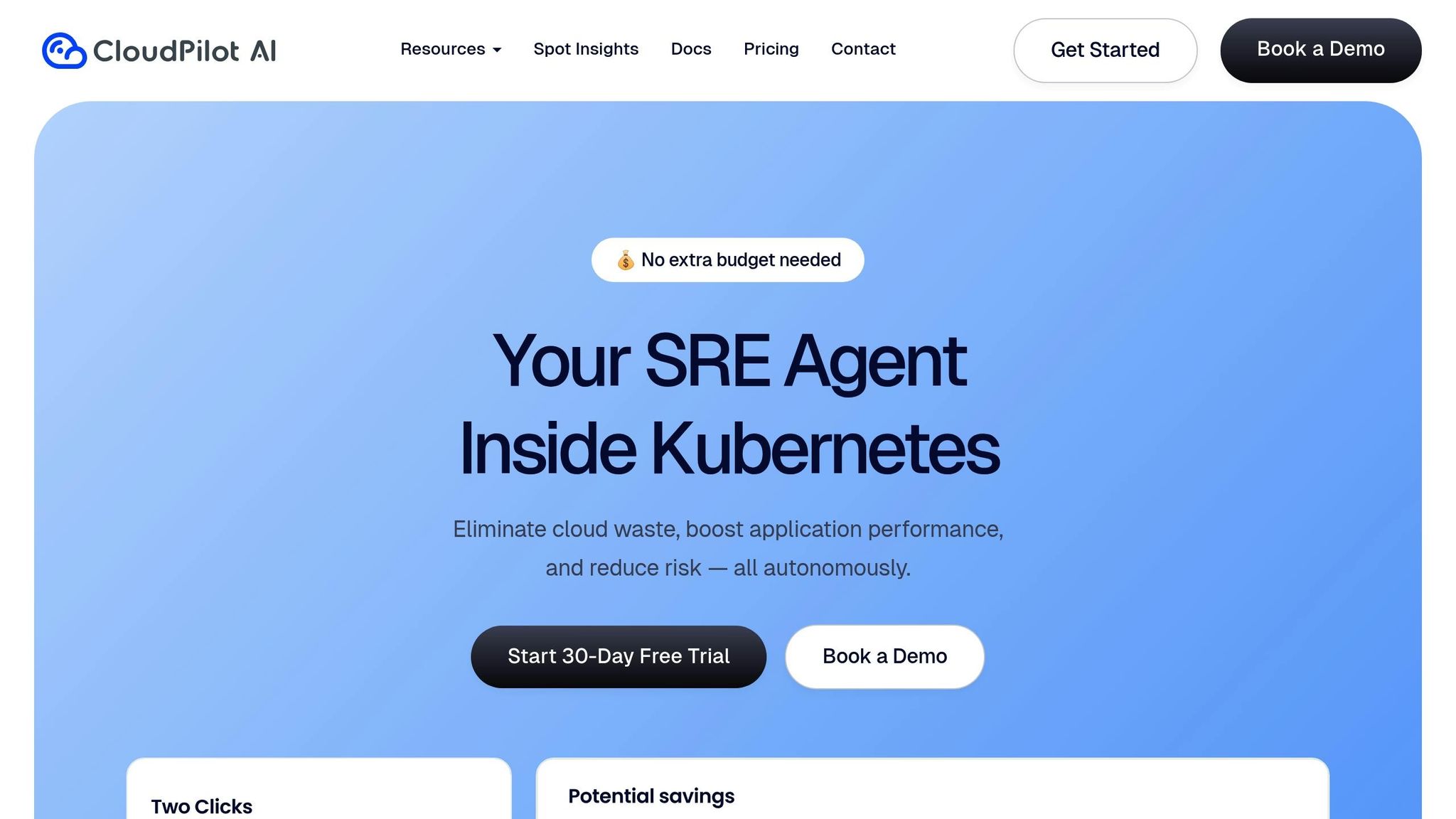
CloudPilot AI fine-tunes the cost and performance of AWS EKS clusters by automating adjustments for Kubernetes workloads. Its primary goal is to simplify and enhance the management of Amazon Elastic Kubernetes Service (EKS) clusters.
Clear Cost Insights for AWS EKS Clusters
CloudPilot AI offers a detailed view of spending patterns within EKS clusters. By consolidating cost data from multiple clusters, it helps teams pinpoint where container-related expenses are piling up, making it easier to allocate resources wisely.
Automated Cost Adjustments
Powered by Karpenter, CloudPilot AI dynamically adjusts cluster capacity based on real-time workload needs. This automation prevents over-provisioning, helping to reduce unnecessary expenses while maintaining efficiency.
Quick Setup via AWS Marketplace
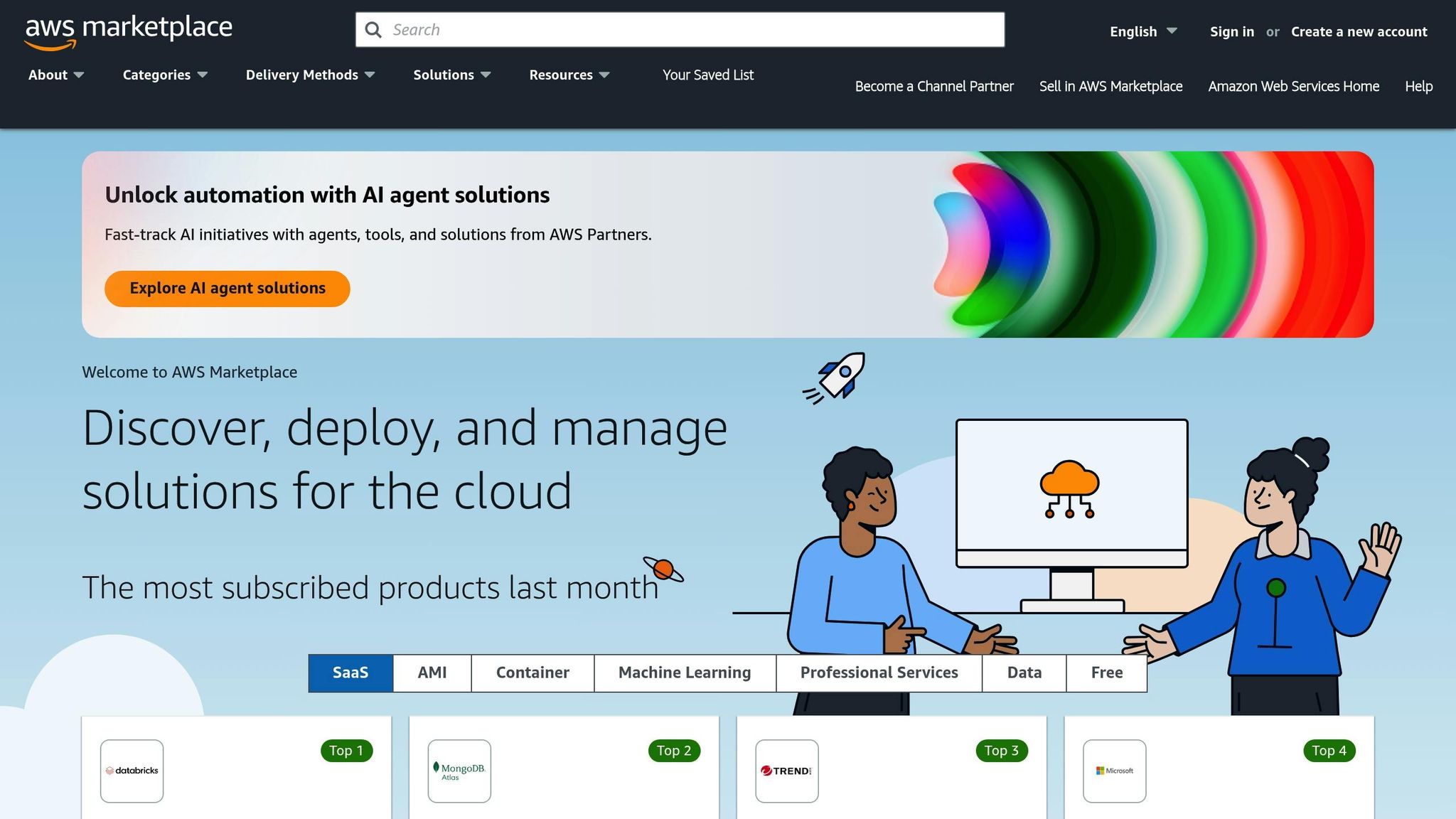
You can find CloudPilot AI on the AWS Marketplace, where it can be deployed in about 5 minutes. It integrates effortlessly with EKS, ensuring it follows AWS’s recommended practices.
Identifying and Eliminating Hidden Costs
By continuously monitoring performance and spending, CloudPilot AI uncovers hidden inefficiencies. It can reduce cloud costs by as much as 80%, all while keeping performance steady and reliable.
2. Cloudgov.ai
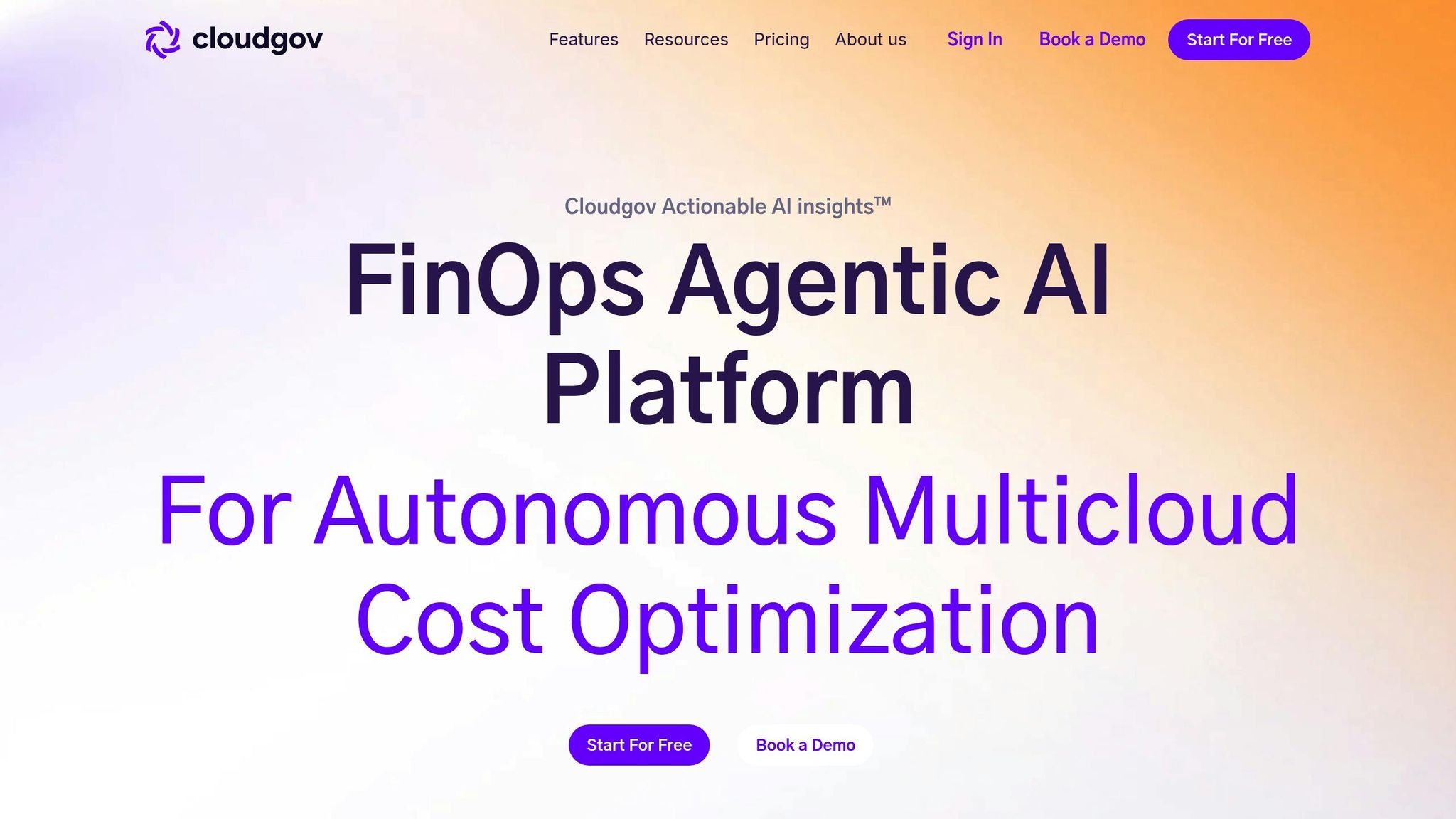
Cloudgov.ai simplifies the process of managing multi-cloud expenses by offering a unified view of spending across major platforms like AWS, Microsoft Azure, and Google Cloud Platform. With its consolidated dashboard, you can easily monitor costs in one place. Secure API integrations make tracking expenses straightforward, helping businesses make smarter decisions about resource allocation. Paired with tools like CloudPilot AI, it extends cost management capabilities across all key cloud providers.
3. Virtana Platform
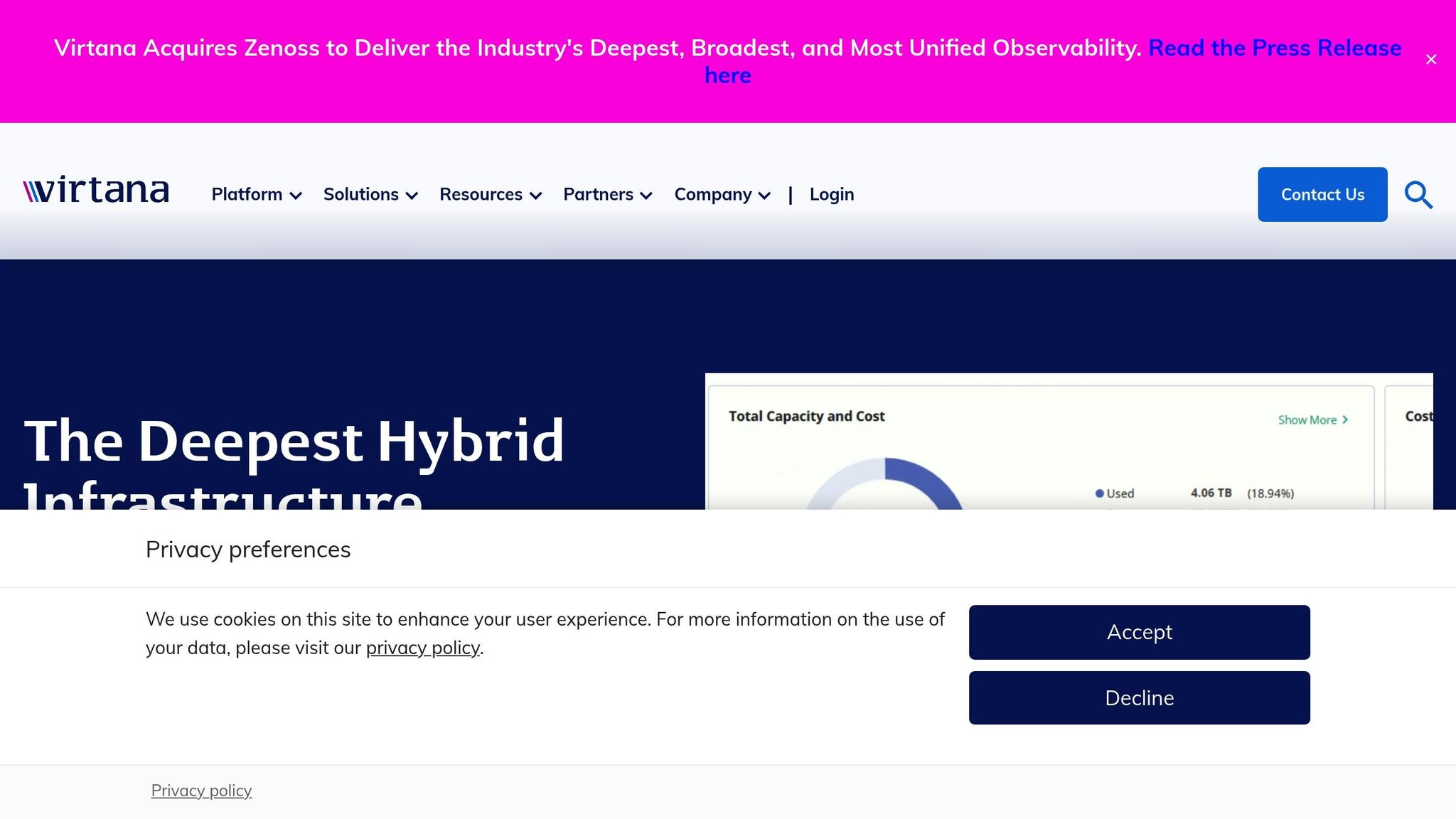
The Virtana Platform offers a solution for organizations grappling with the challenge of managing visibility across multi-cloud infrastructures. It simplifies the monitoring of cloud resources, delivering both instant insights and long-term benefits. By unifying data, it provides detailed, actionable insights into cost allocation and usage.
Centralized Cost Visibility Across Multi-Cloud Environments
With the Virtana Platform, you can consolidate all cloud spending into a single, easy-to-read dashboard. It pulls cost data from various cloud providers and presents it through clear visualizations, helping you navigate complex billing structures. You can drill down from an overview of total spending to detailed resource-level costs, pinpointing which departments, projects, or applications are driving expenses.
Real-time cost tracking is another standout feature. Unlike traditional monthly billing cycles that often result in surprises, Virtana updates continuously throughout the day. This immediate visibility empowers finance teams to stay on top of budgets and avoid unexpected charges before they escalate.
Automation for Cost Optimization and Resource Allocation
Beyond visibility, Virtana’s automation features enhance cost management. The platform’s automation engine analyzes resource usage and implements cost-saving measures automatically. For example, automated rightsizing adjusts instance types and sizes based on actual usage patterns, while scheduled scaling reduces resources during off-peak hours without manual effort.
The platform also supports policy-driven governance, enabling you to set spending thresholds and define automated responses. If costs near these thresholds, the system can pause non-critical workloads, alert relevant teams, or initiate cost-saving actions. This proactive approach helps maintain efficiency while keeping budgets in check.
Integration with Major Cloud Providers
Virtana seamlessly integrates with AWS, Microsoft Azure, and Google Cloud Platform, ensuring full coverage of your multi-cloud setup. Using secure API connections, it collects detailed billing and usage data, normalizing it into consistent formats regardless of the cloud provider’s native reporting structure.
A unified tagging system further simplifies cost management. This feature ensures consistent cost allocation and chargeback processes across all connected cloud environments, making financial reporting and cross-cloud performance comparisons straightforward.
Actionable Recommendations and Real-Time Alerts to Reduce Waste
The platform uses machine learning to deliver intelligent recommendations tailored to your usage patterns. It identifies underutilized resources, suggests optimal instance types, and recommends reserved instance purchases that could lead to significant savings. These recommendations include projected savings and timelines, helping you prioritize actions effectively.
Smart alerting ensures that notifications are relevant and targeted. Instead of bombarding teams with generic updates, Virtana sends role-specific alerts – budget-related updates for finance teams and resource optimization notifications for engineering teams. This approach minimizes alert fatigue, ensuring critical messages are noticed and acted upon promptly.
4. Morpheus Data
Morpheus Data is a cloud management platform designed to help businesses manage and reduce multi-cloud expenses. It combines cost tracking, automation, and integration capabilities to streamline cloud operations and improve resource efficiency.
Centralized Cost Tracking
Morpheus Data offers a single, easy-to-navigate dashboard that brings together cost data from various cloud environments. This centralized view makes it simpler to monitor spending across multiple clouds, helping businesses stay on top of their budgets.
Automated Resource Management
The platform automates key tasks like provisioning, scaling, decommissioning, and scheduling for non-production environments. By handling these processes automatically, it minimizes waste and helps cut unnecessary costs.
Compatibility with Major Cloud Providers
Morpheus Data works seamlessly with leading public cloud providers and supports hybrid cloud setups. Its cloud-agnostic design ensures consistent operations across different environments, making it easier to migrate workloads without disruptions.
Smart Recommendations and Alerts
A built-in recommendation engine analyzes usage patterns to identify ways to save money. It sends targeted alerts to flag high-cost resources and provides actionable suggestions for cost reduction. For added convenience, users can configure the platform to automatically carry out specific cost-saving actions based on preset rules. This comprehensive approach makes Morpheus Data a powerful tool for managing multi-cloud expenses effectively.
5. CloudBolt
CloudBolt stands out for its ability to bring public and private cloud environments together, simplifying cost management and enabling smarter financial decisions.
Unified Cost Visibility Across Multi-Cloud Platforms
With CloudBolt, all cost data from your cloud environments is brought into a single dashboard. This eliminates the hassle of juggling multiple billing systems from different providers. Instead, you get streamlined reporting that makes cost allocation across various clouds much easier. This centralized approach ensures smoother integration with a variety of platforms, giving you a clearer picture of your cloud spending.
Seamless Integration with Leading Cloud Providers
CloudBolt comes ready with integrations for major platforms like AWS, Microsoft Azure, OCI, GCP, and private virtualization solutions such as VMware, Nutanix, Red Hat, Oracle, Microsoft, and Citrix. These integrations help businesses maximize their cloud investments while reducing the risks of shadow IT.
For Azure users, CloudBolt offers tailored features like simplified reporting, better user management, and direct tools for cost management. As Giacom explains:
"Giacom have partnered with leading Cloud Management Platform provider CloudBolt to give their partners exactly what they need to manage their customers Azure Public Cloud. Simple Azure Reporting, enhanced user management, cost optimisation and improved security, all in one easy-to-use platform!"
Automation for Cost Management and Resource Efficiency
CloudBolt doesn’t stop at integration – it also automates processes to save time and improve efficiency. By working with existing monitoring tools, it can automatically respond to cost anomalies and provide greater billing transparency. This automation reduces manual effort and ensures resources are allocated effectively across your cloud environments.
sbb-itb-59e1987
6. VMware vRealize Suite
VMware vRealize Suite offers robust enterprise management tools designed to optimize costs and improve operational efficiency. It’s a go-to solution for businesses seeking precise control over their infrastructure. Here’s a closer look at its standout features:
Unified Cost Visibility Across Multi-Cloud Platforms
With VMware vRealize Suite, you can view costs across AWS, Azure, Google Cloud, and on-premises VMware setups – all in one place. Thanks to vRealize Operations, the platform provides detailed insights, from department-level expenses to the cost of individual virtual machines (VMs). This level of clarity helps businesses fine-tune their spending and make smarter decisions.
Automated Resource Management for Smarter Spending
vRealize Automation takes the guesswork out of resource allocation. By using policy-driven automation, it adjusts VM sizes based on actual usage, avoiding over-provisioning and ensuring resources match demand.
It also simplifies lifecycle management. For instance, it can automatically shut down non-essential environments, like development or testing, during off-hours and restart them when needed. This feature alone can significantly cut costs for workloads that don’t need to run 24/7.
Seamless Integration with Leading Cloud Providers
The suite integrates directly with major cloud platforms like AWS, Azure, and Google Cloud. By connecting through APIs, it pulls real-time cost data and enables seamless management of both public cloud and on-premises VMware resources as a unified system.
Proactive Alerts and Cost-Saving Recommendations
VMware vRealize Suite doesn’t just monitor your infrastructure – it actively analyzes it. The platform provides actionable recommendations to help reduce waste and offers real-time alerts to keep costs in check. These alerts can be tailored for finance teams, IT departments, or other stakeholders, ensuring everyone stays informed and in control.
7. Flexera One
Flexera One is a platform designed to bring IT asset management, SaaS management, and FinOps teams together under a single system. By unifying these areas, it helps organizations better coordinate their cost-saving strategies across various departments and cloud environments. Let’s dive into how it improves cost visibility, integration, and optimization.
A Unified Dashboard for Multi-Cloud Management
Flexera One provides a centralized dashboard that tracks spending across all your cloud investments. This includes major public cloud providers like AWS, Azure, and Google Cloud, as well as private cloud setups and regional providers. But it doesn’t stop at simple expense tracking – it also incorporates additional costs to give a full picture of your cloud spending.
One standout feature is its automated tag discovery, which organizes billing data and improves cost allocation accuracy by as much as 30%. This automation makes budgeting and forecasting more precise compared to traditional manual tagging.
Flexera One also breaks down spending by business services, departments, cost centers, and even individual users. These insights allow finance teams to pinpoint exactly where money is going and uncover opportunities to cut costs across the organization.
Seamless Integration with Cloud Providers
Flexera One connects directly with major and regional cloud providers using native APIs, ensuring real-time access to billing and usage data. This integration offers a complete view of your cloud expenditures.
What makes it especially useful is its ability to work with smaller, regional cloud providers alongside giants like AWS and Azure. For businesses with diverse cloud setups spread across multiple vendors and locations, this flexibility is key.
Practical Recommendations to Reduce Cloud Waste
Flexera One doesn’t just monitor spending – it actively helps reduce it. By analyzing cloud usage, the platform suggests rightsizing resources and purchasing reserved instances to save money. It flags underused resources and highlights areas where commitment discounts or reserved instance purchases could lead to immediate cost savings.
For instance, Accruent, a software company, managed to save $200,000 annually across three cloud providers by using Flexera One.
"Flexera helped us get insights on our cloud spend and be more efficient by reducing waste." – JayKay Selvaraj, Senior Manager, Technical Products, Coupa Software
The platform also promotes collaboration between FinOps teams, IT asset managers, business units, and cloud resource owners. This teamwork ensures that cost-saving measures are implemented quickly and effectively. With intuitive dashboards and customizable reports, teams can easily track their progress and measure the impact of their cost optimization efforts in real time.
8. Serverion
Serverion offers a wide range of hosting solutions designed to support multi-cloud strategies while keeping costs manageable. Their services include web hosting, virtual private servers (VPS), dedicated servers, AI GPU Servers, colocation services, blockchain masternode hosting, DNS hosting, SSL certificates, and server management. With data centers spread across the globe, Serverion provides the infrastructure needed to create efficient and reliable cloud architectures. This variety of services helps businesses maintain predictable costs and ensure seamless global operations.
Clear Pricing and Global Reach
Serverion stands out with its transparent pricing, making it easier for businesses to plan their infrastructure investments. Their web hosting services start at $33 per year, VPS plans begin at $11 per month, and dedicated servers are available from $83 per month. This straightforward pricing, combined with their global network of data centers, enables organizations to manage budgets effectively while deploying workloads closer to their users, improving both performance and efficiency.
Tailored Management and Specialized Solutions
Serverion’s VPS plans come with full root access, giving businesses the freedom to customize their server environments to match specific requirements. For advanced tasks like machine learning and data processing, their AI GPU Servers offer dedicated GPU resources with fixed monthly pricing. Additionally, their colocation services allow companies to maintain physical control over their hardware while benefiting from professional infrastructure management, making it easier to handle specialized workloads.
Enhancing Multi-Cloud Strategies
To further support multi-cloud environments, Serverion offers DNS hosting and SSL certificates (starting at $9 per year) for centralized domain management and enhanced security. For blockchain-focused businesses, their masternode hosting starts at $198 per year, complete with 24/7 support and strong DDoS protection to ensure reliability and security at an enterprise level.
9. Apptio Cloudability
Apptio Cloudability simplifies financial management across multi-cloud environments, turning complex cloud spending data into clear, actionable insights. By consolidating financial details from various cloud providers, it helps businesses make smarter decisions about infrastructure investments. This collaborative approach empowers finance and IT teams to align more effectively on cost-saving strategies, supported by its robust visibility and automation tools.
Centralized Cost Visibility Across Multi-Cloud Environments
Cloudability provides a single, unified view of spending across major cloud platforms, eliminating the hassle of managing multiple billing systems. It gathers cost data from various providers and presents it in customizable dashboards, making it easier to spot spending trends, monitor budget performance, and pinpoint the services driving the highest costs.
The platform’s cost allocation tools let businesses assign shared infrastructure expenses to specific departments or projects. This feature is particularly useful for larger organizations where multiple teams utilize the same cloud resources. It ensures accountability, improves budget accuracy, and clarifies spending decisions.
Automation for Cost Optimization and Resource Management
Once cost visibility is established, Cloudability takes it further with automation to help trim expenses. The platform can automatically shut down idle resources during off-peak hours, resize underutilized instances, and recommend reserved instance purchases for long-term savings.
Its policy engine lets IT teams set spending limits and define automatic responses when costs exceed thresholds. These actions might include sending alerts, temporarily halting new resource provisioning, or implementing cost-saving adjustments, such as switching to lower-cost storage options for rarely accessed data.
Seamless Integration with Leading Cloud Providers
Cloudability integrates directly with AWS, Microsoft Azure, and Google Cloud Platform, ensuring that cost data stays accurate and up-to-date, often refreshing within hours of usage. It also supports hybrid setups by connecting with on-premises infrastructure monitoring tools.
In addition to financial data, the platform pulls in performance metrics from cloud providers. This integration allows businesses to link spending with resource usage, uncovering opportunities to enhance performance while reducing costs or justifying additional investments for better application efficiency.
Real-Time Alerts and Actionable Recommendations to Cut Waste
Cloudability’s recommendation engine analyzes usage patterns and highlights specific ways to save money, complete with detailed steps and projected savings. These suggestions often include resizing instances, purchasing reserved capacity for predictable workloads, or eliminating unused resources that rack up unnecessary costs.
The platform also features anomaly detection, which monitors spending trends and alerts teams to unusual spikes. Alerts can be customized based on percentage increases, dollar thresholds, or deviations from historical patterns. Additionally, its budget tracking tools send proactive notifications when spending nears set limits, helping organizations avoid unexpected overages and stay in control of their cloud budgets.
10. Spot by NetApp
Spot by NetApp is designed to streamline multi-cloud cost management through automation and intelligent resource allocation. It focuses on improving the efficiency of cloud infrastructures while reducing expenses across complex multi-cloud setups. By leveraging advanced analytics and automated tools, Spot enables organizations to save money without compromising on performance or reliability.
Centralized Cost Visibility for Multi-Cloud Management
Spot by NetApp offers a unified view of costs across AWS, Azure, and Google Cloud Platform (GCP). Its centralized dashboard consolidates financial data, providing full transparency into cloud spending. The platform integrates cloud visibility, analytics, cost tracking, and infrastructure optimization into one cohesive system. This makes it easier for organizations to identify cost drivers, monitor budgets, and analyze spending trends. Spot’s cost analysts also dive deep into usage patterns and existing commitments to craft tailored optimization strategies. This comprehensive approach sets the foundation for its advanced automation tools.
Automated Cost Optimization and Resource Management
Spot’s Eco solution takes the hassle out of managing cloud commitments. It automatically adjusts Reserved Instances, Savings Plans, and Committed Usage Discounts based on real-time demand and provider updates. This ensures that resources are always optimized without manual intervention.
The platform’s Elastigroup feature allows businesses to scale and manage workloads on Spot Instances across all major cloud providers. It guarantees availability while significantly cutting costs by intelligently placing workloads and handling instance interruptions seamlessly.
"With Spot Elastigroup, we can confidently run thousands of spot instances for our core technologies without needing to touch any aspect of our deployment", says Or Arnon, DevOps Team Leader.
Seamless Integration with Leading Cloud Providers
Spot by NetApp integrates effortlessly with AWS, Microsoft Azure, and GCP, enabling unified management of cloud resources across providers. Elastigroup operates natively across these platforms, allowing organizations to optimize workloads regardless of their cloud mix. This ensures consistent cost-saving strategies and smooth resource management across diverse environments.
Practical Recommendations to Reduce Cloud Waste
Spot provides actionable insights by analyzing usage patterns to recommend the best commitment options and rightsizing opportunities.
"Eco perfectly met SignalVine’s needs of freeing up our team to focus on our product while obtaining a significantly higher level of RI savings and making it easy to tweak over time", shares Jason Turim, VP of Engineering at SignalVine.
"Eco’s flexibility allows TuneIn to maximize savings while avoiding long-term commitment lock-in", highlights Ryan White, Senior Director of Engineering Operations at TuneIn.
With Spot’s solutions, organizations benefit from expert guidance and automated tools that adapt to their evolving cloud usage. This ensures ongoing cost savings while maintaining the performance and reliability needed for critical operations.
Tool Comparison Chart
The table below provides an at-a-glance overview of ten tools, summarizing their features, supported cloud providers, pricing, best use cases, and potential drawbacks. This quick reference is designed to help you weigh your options effectively.
| Tool | Cloud Providers | Key Features | Pricing (USD) | Best Use Cases | Limitations |
|---|---|---|---|---|---|
| CloudPilot AI | AWS, Azure, GCP | AI-driven recommendations, automated rightsizing, predictive analytics | Starting at $2,500/month | Large enterprises with complex workloads | Expensive for smaller organizations |
| Cloudgov.ai | AWS, Azure, GCP, Oracle Cloud | Government compliance, security-focused, automated governance | Custom pricing | Government agencies, regulated industries | Limited third-party integrations |
| Virtana Platform | AWS, Azure, GCP, VMware | Workload optimization, performance monitoring, capacity planning | $15-25 per monitored VM/month | Hybrid cloud setups, performance-critical apps | Complex to set up |
| Morpheus Data | AWS, Azure, GCP, VMware, OpenStack | Self-service provisioning, policy automation, multi-cloud orchestration | $10-20 per managed resource/month | DevOps teams, app lifecycle management | Steep learning curve |
| CloudBolt | AWS, Azure, GCP, VMware, OpenStack | Hybrid cloud management, cost allocation, automated provisioning | $25-50 per managed VM/month | IT service management, cost allocation | Higher per-unit costs |
| VMware vRealize Suite | AWS, Azure, GCP, VMware vSphere | Infrastructure automation, capacity optimization, compliance management | $3,000-8,000 per CPU/year | VMware-centric environments, enterprise automation | Reliant on VMware ecosystem |
| Flexera One | AWS, Azure, GCP, Oracle, IBM Cloud | Software asset management, cloud cost optimization, compliance tracking | $5-15 per managed asset/month | Software license optimization, compliance management | Complex pricing structure |
| Serverion | AWS, Azure, GCP (via APIs) | Unified hosting management, cost visibility, infrastructure optimization | Starting at $120/year for VPS management | SMBs, hybrid infrastructure | Lacks advanced analytics |
| Apptio Cloudability | AWS, Azure, GCP, Oracle Cloud | Financial management, budget tracking, showback/chargeback | $0.25-0.50 per $100 cloud spend | Financial operations teams, budget oversight | Costs rise with increased cloud spending |
| Spot by NetApp | AWS, Azure, GCP | Automated spot instance management, commitment optimization, workload scaling | 15-25% of savings generated | High-volume compute workloads, containerized apps | Workload must be compatible with spot instances |
The sections below delve deeper into the factors that influence these comparisons.
Cloud Provider Support is a key factor when evaluating tools for multi-cloud environments. Tools with multi-cloud capabilities can gather and analyze cost data from various providers, offering a unified view of expenses. This approach not only simplifies billing but also prevents vendor lock-in, allowing businesses to select the best services for their specific needs.
Pricing Models differ widely across these tools. For instance, Apptio Cloudability uses a percentage-based pricing model, while VMware vRealize Suite charges per CPU or resource. Spot by NetApp stands out with its performance-based pricing, tying their fees to the savings generated – making their success directly linked to your cost reductions.
Kubernetes Support has become increasingly important for managing containerized applications across platforms like EKS, AKS, and GKE. As more businesses adopt containerized workloads, tools with robust Kubernetes management capabilities are essential for maintaining consistent orchestration across cloud environments.
Managing multiple platforms with their own unique tools and protocols can be a daunting task. The most effective solutions simplify this complexity, offering unified management and visibility across different providers and deployment models, helping organizations streamline operations and optimize costs effectively.
Conclusion
Managing cloud expenses effectively is essential for maintaining scalable and cost-efficient operations. The tools highlighted in this guide provide various strategies to help you control costs across AWS, Azure, and Google Cloud Platform. From AI-powered cost recommendations to automated spot instance management, these solutions address different aspects of multi-cloud cost optimization.
The key to success lies in selecting tools that align with your specific workloads, organizational scale, and compliance requirements. Opting for platforms that consolidate cost data across multiple providers not only enhances visibility but also helps avoid vendor lock-in – an important factor as your cloud usage expands.
Be sure to evaluate the pricing models of these tools, whether they charge a fixed fee or a percentage of savings. Additionally, prioritize tools that support container orchestration, ensuring they fit seamlessly into your deployment strategies. The best solutions strike a balance between automation and clear, actionable spending insights, empowering you to make smarter financial decisions for your cloud infrastructure.
FAQs
What’s the best way to choose a multi-cloud cost optimization tool for my organization?
To select the best multi-cloud cost optimization tool for your organization, begin by pinpointing your specific requirements. Look for features like cost forecasting, automated alerts, and machine learning-based anomaly detection. Tools that enable rightsizing resources, automation, and incorporate FinOps practices can simplify operations and improve efficiency.
Think about your key goals – whether it’s enhancing cost visibility, cutting down on manual tasks, or using predictive analytics to stay ahead. Matching these priorities with the tool’s features will help you get the most value and effectiveness out of your multi-cloud setup.
What are the main advantages of using automation for multi-cloud cost optimization, and how do these tools work?
Automation plays a pivotal role in optimizing costs across multi-cloud environments. It reduces the need for manual intervention, boosts resource efficiency, and allows for real-time cost management. These tools analyze billing data, track resource usage, and make automatic adjustments – like scaling resources up or down or rightsizing configurations – to align with current demands.
By integrating automation, businesses can simplify their operations, cut down on avoidable expenses, and respond swiftly to shifting requirements. This approach ensures both cost savings and operational flexibility in the often-complex landscape of multi-cloud systems.
How can businesses avoid being locked into a single cloud provider while using cost optimization tools?
To avoid being tied to a single vendor in multi-cloud environments, businesses can turn to cloud-agnostic solutions like Kubernetes-based containerization. This approach ensures smooth portability between different cloud providers, making transitions far less complicated.
Another smart move is leveraging open-source tools, which provide greater flexibility and help steer clear of relying too heavily on proprietary platforms.
On top of that, adopting pay-as-you-go models and focusing on optimized resource allocation can keep operations nimble. These strategies not only help reduce dependence on any one provider but also make it easier to pivot when necessary, ensuring both cost efficiency and operational independence over the long haul.